The European Union and Latin America in an Era of «Vassalization»
Nueva Sociedad 321 / Enero - Febrero 2026
The administration of Donald Trump is reshaping hemispheric and transatlantic relations. The aspirations for autonomy and shared development embedded in the partnership between the European Union and Latin America have thus become even more salient; however, the summit convened by both regions in Santa Marta (Colombia) in November 2025 raises doubts about their capacity and political will to sustain these objectives.

The Santa Marta EU-CELAC Summit: Absences and Fragmentation
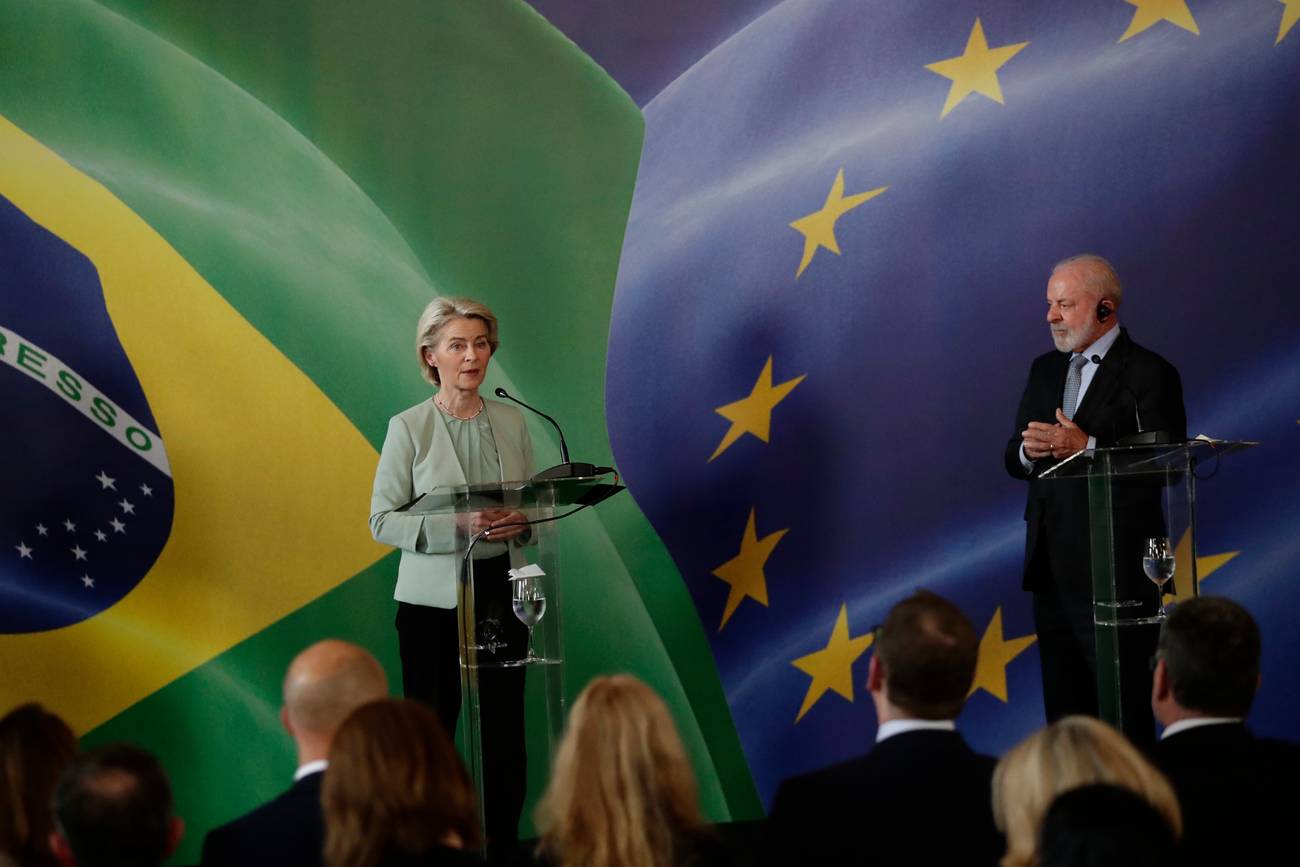
On November 9, 2025, the Fourth Summit between the European Union and the Community of Latin American and Caribbean States (CELAC) was held in the Colombian city of Santa Marta. Despite the high initial expectations, the meeting left a bleak impression. In the face of the mobilization just a few hundred miles away, of a powerful US aeronaval force and its illegal attacks on alleged «narco-boats,» only 9 of the 60 heads of state and government invited attended the meeting1. Among the most influential European countries, only Spain’s Pedro Sánchez and Portugal’s Luís Montenegro were present, due to their particular Ibero-American ties. On behalf of the EU institutions, the President of the European Commission, Ursula von der Leyen, delegated representation to the Vice-President and High Representative for Foreign Affairs and Security Policy, Kaja Kallas. A last-minute attempt from the European side to downgrade the summit to the ministerial level was thwarted by the efforts of the Colombian CELAC Presidency and by Brazilian President Luiz Inácio Lula da Silva, when he announced that he would attend the summit—something that had not yet been guaranteed. Only then did the President of the European Council, António Costa, confirm his attendance. Lula da Silva was explicit about the need to take part in the meeting as a gesture of regional unity and recognition of the importance of relations with the EU. In his own words, «the meeting only makes sense at this moment if we discuss this issue of US warships in Latin American waters.»2
Months earlier, projections regarding leaders’ attendance were still optimistic, particularly on the part of an EU interested in asserting an autonomous presence in Latin America. The political fragmentation affecting the region led, at one point, to the list of European attendees being longer than that anticipated on the CELAC side. In addition to tense relations among ideologically opposed leaders and countries, the rupture of diplomatic relations between Ecuador and Mexico—and later between Peru and Mexico—further strained the regional context. A few days before the Santa Marta Summit, the Dominican Republic announced, with the backing of United States, that the Summit of the Americas would be postponed to 2026. This reflected, as a manifestation of the underlying ideological divide, the US’ refusal to extend invitations to Cuba, Nicaragua, and Venezuela—a position opposed by Colombia and Mexico.
Moreover, the context of the summit became more challenging following the sanctions imposed by the US government against Colombian President Gustavo Petro, whom Donald Trump accused in October of being «a drug trafficking leader who encourages the mass production of drugs.» In addition, the start of military operations in the Caribbean was announced with the stated objective of combating drug trafficking, but which in fact were aimed at regime change in Venezuela. According to diplomatic sources, the absences were due in almost all cases to scheduling conflicts—the COP30 was beginning the following day in the Brazilian city of Belém do Pará—and the choice of Santa Marta as the venue—which was celebrating the fifth centenary of its founding—did not help either, as it does not offer good international connections.
However, the low turnout of leaders is better explained by the reluctance to take a position vis-à-vis Trump and to have to take sides against the growing US interventionism in the region3. In October, Gustavo Petro denounced pressure from Washington, DC on Caribbean countries not to attend the meeting, and, through social media, he stated on 3 November: «Forces opposed to peace in the Americas have sought to make the CELAC–Europe summit fail.»4 In a rapid trickle, most European leaders dropped out to avoid being drawn into a confrontation with the US over Latin America, at a time when transatlantic relations were also strained. In that context, the confrontational rhetoric of Gustavo Petro, in response to the provocations of Donald Trump, proved more of an obstacle than a help. Citing European diplomatic sources, Bloomberg reported that «the EU is shying away from the Latin America summit as Trump pressures the region,» and added that «at a time when the EU is seeking to advance relations beyond the US, the decision by most EU leaders to stay on the sidelines does not bode well and suggests that fear of antagonizing Trump outweighs interest in strategic autonomy.»5
Once in Santa Marta, the effective work of the foreign ministries, the European External Action Service, and the Colombian CELAC Presidency made it possible to adopt a final declaration endorsed—albeit with reservations—by 58 countries, which, just days earlier, had seemed unlikely.6 Nicaragua did not endorse the declaration, and Venezuela—despite having participated actively—withdrew in the final phase due to disagreement over the war in Ukraine, even though the language used was similar to that of the previous summit.7 Given the circumstances, the achievement of this agreement is a noteworthy outcome. To that end, some countries were allowed to «disassociate» themselves from the points they did not accept, something unusual in summit diplomacy. However, that flexibility did not prevent the rule of the lowest common denominator from shaping the text, which remained fairly tepid and contained visible omissions, ellipses, and implied understandings.
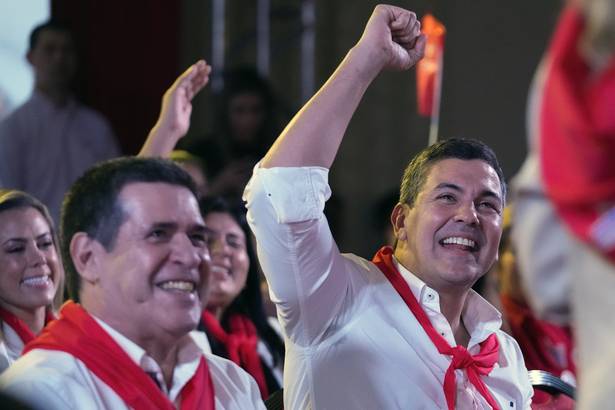
Under different circumstances, references to multilateralism, to the United Nations Charter, and to the basic principles of international law—respect for sovereignty and non-intervention, territorial integrity, the prohibition of the use of force, and the peaceful settlement of disputes—would have formed part of the customary ritual and rhetoric of summit diplomacy. On this occasion, however, despite their cautious tone, they acquired particular significance in light of the US’ military deployment and acts of force, supported or tolerated by some of the countries present. This recourse to force would escalate in January 2026 with the illegal armed intervention in Venezuela. US—the proverbial elephant in the room—does not appear in the declaration, yet the references to international norms clearly allude to the policies of Trump.8 However, its limited scope and uneven support clearly reveal the political fragmentation of Latin America and the influence of a more interventionist US. A self-styled «Trumpist front»—comprising Argentina, Costa Rica, Ecuador, El Salvador, Panama, Paraguay, and Trinidad and Tobago—«dissociated» itself from the clause reaffirming CELAC as a «zone of peace,» from the emphasis on maritime security in the Caribbean, and from the call to respect international law in the fight against drug trafficking. In different ways—and with Argentina and Paraguay as the most extreme cases—the countries in this front also distanced themselves from the agreed language on the Gaza war, aligning with Israel; from the rejection of extraterritorial sanctions against Cuba, thereby breaking with a decades-long biregional consensus; from the agreements of the United Nations (UN)—the Pact for the Future and the 2030 Agenda—and, in particular, from the gender equality agenda; and, finally, from a human rights–based approach to digital regulation (Argentina) and from the need to confront disinformation and hate speech, including forms involving gender-based violence and discrimination (Argentina and Paraguay).There are, nevertheless, some exceptions to the anti-globalist script of the far right: acknowledging Latin America’s particular vulnerability to climate change, all countries endorsed the emissions-reduction commitments of the Paris Agreement. Likewise, they supported a multilateral trading system grounded in the rules of the World Trade Organization (WTO) and affirmed the need to reduce «trade tensions,» in a message directed at Washington.9 Despite the role of the EU–Southern Common Market (Mercosur) Agreement as an evident response to these «tensions,» the declaration does not mention it—on this occasion due to France’s opposition.
The Pursuit of Autonomy and Geopolitical Rationality
The Santa Marta Summit is the most recent milestone in a trajectory of more than four decades of political dialogue, cooperation, and economic ties that must be recalled in order to assess the political significance of those absences and of what was ultimately agreed. Since its inception in the 1980s, the EU’s policy toward Latin America has reflected a discernible intention to expand the autonomy of both regions vis-à-vis hegemonic forces and, through an interregional logic, to promote improved global governance. While acknowledging the existence of asymmetries and economic interests, this has been a relationship of choice rather than a «natural» or given one, however much it has been justified through a rhetoric centered on shared values or historical and sociocultural ties. Yet the European presence in what was considered the US’ «backyard» did not go so far as to challenge transatlantic relations or the anchoring of both regions—albeit to varying degrees—within the Western bloc10.
Before intergovernmental dialogue was established, the leading role was played by the political internationals, in defense of human rights and in solidarity against military dictatorships and the rigid alignments of the Cold War. In 1984, intergovernmental relations began through the so-called San José Dialogue, aimed at supporting the Contadora and Esquipulas peace processes in Central America. From that period dates a precedent of particular relevance for what occurred in Santa Marta: on the eve of the first San José meeting, proposed by then Costa Rican president Luis Alberto Monge, the Secretary of State in Ronald Reagan’s administration, George Shultz, attempted to halt European mediation in the Central American internal conflicts by requesting that the meeting not be held. However, the letter sent by Shultz was leaked to the press by the French socialist government. Once those pressures became public, Europe responded by elevating the meeting—initially low profile—to ministerial rank. In 1990, the EU–Rio Group dialogue was launched, now involving all the democratic governments of Latin America, with a focus on advancing peace in Central America and supporting processes of democratic transition and consolidation across the region. With the end of the Cold War and the onset of globalization processes, the agenda expanded to include support for regionalism and the promotion of trade and investment. This shift gave rise to an interregional strategy based on association agreements that remains in force today, with the EU–Mercosur Agreement as the last pending task. In 1999, the ministerial-level political dialogue gave way to summits of heads of state and government which, with varying periodicity, lead directly to the Santa Marta Summit.
From this body of experience, valuable lessons can be drawn: that the biregional relationship makes it possible to expand the margins of autonomy of both parties vis-à-vis the bipolarity of the time and today’s attempts to erect a new bipolar order or recreate spheres of influence; that regionalism and regional integration are important and contribute to development and multilateralism; that development cooperation with political objectives—focused on democracy, peace, or the reduction of inequality—matters in contrast to technocratic or economistic approaches; and that trade agreements carry significant geopolitical meaning. In the context of post–Cold War economic competition, association agreements were a strategy to diversify and secure markets in the face of the Free Trade Area of the Americas (FTAA) project and, when that initiative stalled, in response to bilateral treaties—small-scale versions of the FTAA—that Washington signed with specific countries. That same role—diversification, access, and predictability, now framed in terms of resilience or economic security—is what EU–Latin American agreements would be expected to fulfill today in the context of economic and technological competition between China and the US.
Finally, interregionalism between the EU and Latin America has been able to respond to «material» interests such as the diversification of relations and access to markets. But it also expresses a normative vision that conceives regional groupings as part of multilateralism and global governance, while acknowledging the increased economic interactions and the ideational and political affinities characteristic of regionalism.11
However, the post-Cold War and globalization era for which that interregional strategy was designed has ceased to exist. The international system is mired in a prolonged phase of polycrisis or interregnum, with an uncertain outcome. It is marked by far-reaching economic and technological transformations, environmental crisis and emergency, rapid power transitions, and growing contestation of the liberal international order. Trump’s first term was more than a warning: it opened a phase of trade wars and challenges to globalization and its governance. All of this has been compounded by the COVID-19 pandemic and the war in Ukraine, which have reinforced prior trends toward fragmentation, vulnerability, and the retrenchment of economic ties, while also revaluing the notions of security and resilience vis-à-vis the logics of liberalization and efficiency associated with globalization. Trump’s second term, more strategic, disruptive, and radical than the first, calls into question the very notion of the West, the transatlantic link, and hemispheric relations and, as noted below, poses a direct threat of resubordination. All of this requires a redefinition of development and international insertion strategies, of security and resilience, and, ultimately, a review of EU–Latin America relations and an assessment of what can be done jointly to respond to these crises while preserving margins of autonomy and maintaining independent pathways to address technological and productive change and the reconfiguration of the global economy and politics.
Against this backdrop, the interruption of the EU–CELAC political dialogue since 2015 was an anomalous and worrying development. The cancellation of the EU– CELAC Summit scheduled for 2017 was due, in the first instance, to the Lima Group’s strategy of isolating Venezuela, an expression of «subordinate Trumpism» that blocked regional platforms such as CELAC and the Union of South American Nations (Unasur). In turn, this reflected broader political fractures in Latin America: between left and right, and between democratic and authoritarian lefts, which eroded the minimum levels of cohesion and agency required by interregionalism.
But the stagnation of biregional relations can also be attributed to Europe’s negligent attitude toward Latin America and to visible policy errors: the 2016 Global Strategy and Security Strategy, promoted by Federica Mogherini as High Representative, assigned Latin America a peripheral role and banked on an understanding with the US that, with Trump in the Presidency, proved unattainable; and development cooperation contracted as a result of the misguided «graduation» of higher-income countries, which reflected a traditional North–South view of external aid.12 The 2019 EU–Mercosur agreement was stalled by opposition to Jair Bolsonaro’s environmental policies in Brazil and by protectionist pressures in some EU member states, such as France.
The first von der Leyen Commission (2019-2024), then High Representative Josep Borrell, and Spain’s Presidency of the Council of the EU in 2023 promoted a review and renewal of relations, with a new strategy for Latin America guided by the pursuit of strategic autonomy vis-à-vis the US and China.13 Political dialogue was restored with a new EU–CELAC Summit—the first in eight years—held in Brussels in July of that year. Development policy was updated with a more horizontal logic, based on common interest, incorporating flagship initiatives and additional financial resources to drive the green and digital transitions, such as the Global Gateway investment program. With significant concessions on both sides, under the logic of strategic autonomy, the EU–Mercosur agreement was revised. Its conclusion in December 2024 was driven by fears of a new Trump term. Rather than merely removing trade barriers, the aim was now to establish a rules-based common economic area, in line with the logic of friendshoring, that would enable industrial policy and productive development in the face of the dismantling of the multilateral trading system, trade wars, and the coercive use («weaponization») of interdependence by the US.
As for political dialogue, the Brussels EU–CELAC Summit affirmed these goals: expanding autonomy and resilience, sustaining multilateralism, and promoting economic partnerships and cooperation geared toward just transitions, moving beyond the old vertical North–South logic in which the relationship was originally framed. This did not mean overlooking disagreements. The war in Ukraine, for example, revealed convergences in principles and differences in positions regarding the parties to the conflict, which led to a lowest-common-denominator final declaration; despite this, Nicaragua did not join the declaration.14
From Autonomy to Vassalage: Latin America and the EU in Trump’s World
In the face of Trump’s accelerated strategy to challenge the international order, the leaders’ walkout in Santa Marta might be seen as a minor matter. However, it is the result of a political strategy in which the US views the world in terms of spheres of influence, within a techno-imperial logic that harkens back to both the nineteenth and the twenty-first centuries, and that bets on the strategic subordination of both regions, in addition to promoting governments aligned with far-right political forces.15 It is thus established in the National Security Strategy released by the White House in December 2025. Such a strategy of «vassalization»—a term widely used by the president of France, Emmanuel Macron—has decisively influenced both Europe and Latin America, updating the long-standing aspiration for autonomy present in the biregional relationship. It also reveals that in both regions there are governments and elites willing to gladly accept such vassalage.16
With regard to Latin America, Trump’s policy revives an imaginary of exceptionalism and «Manifest Destiny.» This refers back to the imperial nationalism of the late nineteenth century and to the Monroe Doctrine, to which a «Trump corollary» is added, once again relying on military force and economic instruments. Within this framework, the primary objective is to subordinate Latin America to migration control, conceived as a security priority, through various measures of pressure—tariffs in particular—to externalize border control. Policies of «tough measures» are encouraged, normalizing restrictions on rights and an authoritarian drift as a security solution, with risks to the rule of law and democratic standards. El Salvador constitutes a key country in this regard. In the face of the concentration of power, the erosion of democratic checks and balances, and the state of exception, Washington has praised the leadership of Nayib Bukele, thereby contributing, de facto, to the normalization of his process of autocratization as an exportable model. Second, although not novel, the anti-drug agenda is prioritized, increasingly securitized, including the designation of cartels as terrorist threats as well as unilateral and militarized responses. Third, the containment of China emerges: nearshoring and the reconfiguration of supply chains are promoted, accompanied by pressures on critical infrastructures, such as the Panama Canal. Finally, an ideological dimension is added to hemispheric policy, with direct pressures on Cuba, Nicaragua, and, above all, Venezuela. The most disruptive aspect is the use of force against «narco-terrorism» in the Caribbean, with a substantial naval and air deployment that, under this pretext, is in fact aimed at taking control of Venezuela and its resources, implementing a subsequent regime change in that country, and reaffirming Washington’s influence throughout the hemisphere.17
The most striking manifestation of that new imperial projection, to date, has been the armed intervention in Venezuela on January 3, 2026. There may have been an «element of surprise» with respect to the military action itself, but that US intervention was anticipated. After the attack, Trump and Marco Rubio insisted on arguments framed around drugs and immigration, in terms of domestic politics. While announcing an understanding with chavismo, they scarcely used the term «democracy» and instead, repeatedly invoked «stability» and «oil» to also link it to national interests and America First policy. This is part of a strategy announced prior to the beginning of Trump’s second term, and it was reaffirmed by the 2025 National Security Strategy, released a few weeks before the attack, which explicitly asserts the return of the Monroe Doctrine to hemispheric relations. It is not coincidental that the expression used by the US president to characterize the intervention in Venezuela—an «extraordinary military operation»—is nearly the same as that used by Vladimir Putin in Ukraine. This new interventionism, combined with coercive measures and selective support, extends beyond the Caribbean: Lula’s Brazil has been subjected to pressures—including tariffs and sanctions on the judiciary—in support of former president Jair Bolsonaro. Milei’s Argentina received a substantial financial bailout from the US Treasury with no apparent economic conditions, as its purpose was to stabilize the government in the short term ahead of difficult elections.18
In Honduras, open interference in the general elections of November 2025 has been accompanied by the pardon granted to former president Juan Orlando Hernández, who had been convicted by a federal court of drug trafficking and arms trafficking offenses—analogous to those invoked to capture Nicolás Maduro and his wife—thereby revealing that these charges are in fact a pretext, applied selectively and instrumentally in the service of that new imperial project.
The return of Trump to the White House has also reshaped transatlantic relations. At the beginning of his second term, Trump accused the EU of having been «created to screw the US» and threatened to impose high tariffs. Such threat responds to a geopolitical objective: to force European subordination and free up resources for the Indo-Pacific. Without proposing withdrawal from the North Atlantic Treaty Organization (NATO), he demands that Europeans assume the costs of the war in Ukraine and maintains ambiguity regarding security guarantees, including the nuclear umbrella. In February 2025, these positions were expressed at the Ramstein Group—composed of dozens of countries supporting Ukraine—and, at the White House, through pressure on Volodymyr Zelensky to accept a pax trumpiana very similar to a pax russica. For much of Central, Nordic, and Baltic Europe, Russia is an existential threat; for that reason, the US shift and its de facto alignment with Moscow are experienced as a withdrawal from European security. Trump exploits that fear and uses it as a negotiating lever, placing the EU in a «perfect storm»: if it does not yield on trade or military spending, he applies pressure through Ukraine and the commitment to NATO, leaving Europe trapped in a triple and highly demanding negotiation.19 This was evident at the Atlantic Alliance summit in The Hague, where its European partners were forced to raise military spending to 5% of GDP and to purchase more weapons from the US in order to avoid a rupture with Trump, as symbolized by the obsequious message from its Secretary General, Mark Rutte.20
On the trade front, Trump threatened «reciprocal» tariffs of 50% starting in August 2025. Brussels chose to yield and avoid greater damage with the disastrous Turnberry agreement of July 2025.21 Despite its declared commitment to multilateralism, the EU validated the breach of WTO rules and thereby lost the political capital that might have enabled it to lead an international coalition in defense of rules-based trade, in which major Latin American partners, such as Brazil, could have participated.22 The agreement also entails a significant normative setback, benefiting American corporations by putting an end to the so-called «Brussels effect,» which refers to the role of the EU as a global regulatory power.
In a nutshell, by threatening to abandon its North Atlantic commitment, US demands from Europe a subordinate relationship, which is a double dilemma, between fragmentation and unity, and subordination and strategic autonomy. The latter goal is still present in plans such as ReArm EU, as well as in energy, industrial, defense, and digital regulatory policies. It can also be seen in the search for new partners, such as Mercosur or India. But Atlanticist elites— increasingly close to far-right forces aligned with Trump—continue to bet on appeasement and damage control, at mounting cost, hoping to rebuild their relationship with Washington. This is also reflected in the EU’s weak and fragmented responses to the intervention in Venezuela and the growing threats from the US toward Greenland.
Within this framework, the 2025 National Security Strategy sets out a highly ideological agenda toward the EU. There are transactional priorities—opening markets to US goods and services—but the EU is also portrayed as a woke threat to sovereign nations and to Western civilization. It proposes to «cultivate resistance» to the Union and support «patriotic» forces, with an interventionist intent that could strain the EU’s internal cohesion. The trend points toward the disappearance of the traditional transatlantic link. In this scenario, Europe faces the challenge of redefining its role: accepting subordination and vassalage, or advancing toward strategic autonomy which, though costly and risky, appears to be the only path to guaranteeing its security and global relevance.
Beyond Santa Marta: An Agenda for Progress for the EU and Its Relations with Latin America
In the face of these pressures, and beyond the results of the Santa Marta summit, with its lights and shadows, what role can the Euro-Latin American relationship play? Today it faces an openly interventionist Washington, a more present China, an international order in question, and a more fragmented and uncertain global political economy. In this context, it is worth asking whether the EU can continue to pursue strategic autonomy and converge with Latin American aspirations for development and diversification of relations—entrepreneurial diplomacy or active non-alignment, to cite some of the Latin American formulas for seeking autonomy and a better position in the international system. That rationale is now even more pressing in order to confront the dynamics of vassalization.
With a hostile US and a transatlantic relationship on the verge of disappearing, the European Union must fully assume its «strategic solitude,» seek new partners, and look more—and in a different way—toward the Global South and, in particular, Latin America. It must decide once and for all whether the region will be a peripheral or a strategic partner, and adopt a more horizontal and egalitarian approach in that relationship. As Stefano Manservisi and Mario Pezzini call it, a strategy of «cooperative autonomy» based on more symmetrical interdependencies is needed. For Latin America, the relationship with the EU can also be useful to balance pressures from Washington and China at a time when the region is losing international weight. This requires that joint action prevail, based on shared interests, on issues such as mutual access to markets and financing, the security of supply chains, the climate transition, digital transformation, and the defense and reform of a multilateral order. This is particularly important at a moment when the US has unabashedly revived an interventionist policy that directly recalls the Roosevelt Corollary to the Monroe Doctrine. The aim is to become stable and reliable partners to promote development and diversify relations in investment and trade, based on predictable rules—including higher social and environmental standards—and a firm commitment to multilateralism23.
It is not an easy task. In the realm of imaginaries and narratives, Europe must move beyond the nostalgia of historical-cultural narratives and its civilizational «whiteness,» within which discourses of moral superiority still linger24, or the ritualistic invocation of supposedly shared values. Both regions share a vision of the world based on rules and multilateralism, rather than on spheres of influence or the primacy of force. A more horizontal and cooperative approach, free of condescension and acknowledging historical responsibilities, may help overcome the historical misgivings that still exist in Latin America, where Europe is seen as part of the Global North. The EU enjoys a better image than the US or China in areas such as the green transition, social rights, or gender equality, but it must be more sensitive to asymmetries. From Europe, it must also be acknowledged that double standards regarding vaccines and, above all, the genocidal war in Gaza Strip have damaged—perhaps irreversibly—Europe’s moral authority as a normative power. Alongside the European interests at stake—access to critical raw materials, diversification of markets, securing investments and supply chains, and promoting more demanding environmental and labor standards—the interests of Latin America must also be incorporated into its agenda of autonomy and development. The region is calling for financing, technology transfer, and policy space for industrialization, as well as support in social and health matters, and cooperation to address the crisis of citizen security it is experiencing. Both regions need regulatory dialogue in areas such as the green and digital transitions, and to jointly promote and defend the labor, environmental, and social standards already mentioned.25 The need to ensure digital sovereignty also concerns both regions and requires joint efforts.
Within these shared agendas, the EU–Mercosur agreement is decisive. Despite internal resistance within the EU, in January 2026 it was approved by the Council, which allowed its signing in Asunción and the start of the ratification process in Mercosur. In the face of Donald Trump’s tariff offensive, it would have been difficult to understand had it failed to move forward. Without that agreement, it would be hard to continue speaking of a truly «geopolitical Europe.»
In light of this context, it is paramount to address the conflicts still present. European regulations to combat deforestation—a democratic demand from European citizens—have been questioned for their hierarchical and unilateral approach; their phased implementation must combine climate ambition with operational feasibility. Rather than postponing their application or diluting the rules of the European Green Deal, as some business interests demand, they should be implemented gradually and with technical cooperation, with the affected countries as co-participants.
The same can be said of the Global Gateway program, which will only be credible if it provides real access to financing, generates tangible projects and shared benefits in its priority areas—physical and digital connectivity infrastructure, the green transition, and educational or health gaps—and does not respond solely to the interests of European companies or governments. In particular, it should not encourage a new extractivist cycle. Global Gateway also requires better governance, greater Latin American ownership, and the effective mobilization of financing, without sacrificing— in the name of that investment agenda—other valuable forms of development cooperation.26 Some initiatives presented in Santa Marta—the major electricity interconnection project in Central America or the renewable energy program in Colombia—move in that direction. There are also areas of strategic collaboration with significant potential for cooperation, for example in the aerospace sector and in digital sovereignty, as illustrated by the Copernicus program. The European project IRIS² (Infrastructure for Resilience, Interconnection and Security by Satellite), aimed at creating a satellite internet network that seeks to provide an alternative to the quasi-monopoly of Starlink, owned by Elon Musk, also opens opportunities for collaboration with key partners in Latin America.
In other areas of cooperation, voluntary partnerships have been chosen—though open to all—such as those agreed on the margins of the final declaration of Santa Marta. This is the case of the EU–Latin America and the Caribbean Alliance for Citizen Security27 and the Biregional Care Pact.28 The first brings together 17 Latin American countries and the EU as a whole, with the notable absence of Argentina and El Salvador, and seeks to strengthen cooperation against transnational criminal networks through a multilateral, whole-of-society approach based on evidence, distancing itself from securitized and ideologized approaches. When security becomes a pretext for autocratic tendencies—as illustrated by the «Bukele model»—it is necessary to promote a new model of democratic citizen security grounded in the rule of law and human rights. The Care Pact brings together the EU and 16 Latin American countries, with Argentina and Peru absent, and repositions issues of gender equality and the social agenda in a place they could not occupy at the 2023 summit in Brussels. It establishes a permanent forum for dialogue, exchange, and mutual learning—with national focal points—on care-related norms, policies, and financing.
Final remarks
Barely a year has passed since the start of Trump’s new term, and the EU and Latin America have had to confront a US that has transformed— for the worse—the system of international relations, hemispheric relations, and the transatlantic link. The de facto alliance between the US and Russia, the intervention in Venezuela, and the announcement of a possible «takeover» of Greenland—territory of an EU member state—are part of this mutation. It is a policy of vassalization for a world of spheres of influence, without rules or order, full of risks and uncertainties, that opens no horizons for development or democracy. Yet, paradoxically, it may leave space for Latin America and the EU to become more reliable and closer partners.
After the North Atlantic Treaty Organization summit in The Hague and the poor trade deal reached in Turnberry, the EU —gripped by its fears regarding the war in Ukraine—appears to have opted for a strategy of accommodation or subordination in order to avoid greater harm. So far, the pattern of relations displayed by Latin America toward the Donald Trump administration has oscillated between the subordinate Trumpism of ideologically aligned governments, the prostration of the weaker ones, and the transactional accommodation and damage control of the more influential countries. The Global South also seems to follow this pattern, without concerted action. In that context, Santa Marta was not—and could hardly have been—a noisy meeting «against Trump, » and ended up being a lackluster gathering due to the absence of leaders and the tepid tone of its final declaration. However, with or without Trump’s policies, the biregional relationship may still prove useful in avoiding the dynamic of subordination that Trump and his allies in both regions—part of a veritable global reactionary international—have already set in motion. In short, in the face of Trump and the subordinate Trumpism that nests within their own ranks, both regions need a stronger relationship—one that serves development, cooperative autonomy, and an improved position in the international system. The roadmap should be clear.
-
1.
«Solo nueve jefes de Estado y de Gobierno llegan a Colombia para participar de la Cumbre CELAC-UE» in Efe, 11/9/2025.
-
2.
Juan Esteban Lewin and Silvia Ayuso: «La confirmación de última hora de Lula salva una Cumbre ue-celac lastrada por las ausencias» in El País, 11/4/2025.
-
3.
Henry Foy, Anne-Sylvane Chassany and Michael Stott: «eu Leaders to Sip Summit in Colombia after Trump Sanctions,» in Financial Times, 11/4/2025.
-
4.
Post on X (formerly Twitter).
-
5.
Suzanne Lynch: «EU Runs Scared from Latin America Summit as Trump Pressures Region,» in Bloomberg, 11/4/2025.
-
6.
«Declaración conjunta de la Cumbre celac-ue 2025», press release, 11/9/2025, available at <www.consilium.europa.eu/es/pre...
-
7.
Federico Rivas: «El ‘suicidio diplomático’ de Venezuela en la cumbre de la CELAC-UE desconcierta a las cancillerías» in El País, 11/11/2025.
-
8.
«Kaja Kallas: ‘La declaración de Santa Marta no menciona a eeuu porque de lo contrario menos países habrían firmado’» in El País, 11/10/2025.
-
9.
Carolina Zaccato: «La ‘otra’ alianza transatlántica. La Cumbre celac-ue de Santa Marta y la necesidad de profundizar el vínculo entre la Unión Europea y América Latina en tiempos de impugnación al orden internacional» in Revista Derecho y Economía de la Integración, in press, 11/15/2025.
-
10.
See a comprehensive analysis of these relations in J. A. Sanahuja and Roberto Domínguez (eds.): The Palgrave Handbook of eu–Latin American Relations, Palgrave Macmillan, Cham, 2025.
-
11.
J.A. Sanahuja: «La vía latinoamericana de Europa» in El Grand Continent, 6/17/2023.
-
12.
Graduation is the system that classifies countries according to their level of development to determine whether they receive international cooperation, to what extent, or whether they cease to receive it.
-
13.
European Commission and High Representative for Foreign Affairs and Security Policy: «Joint communication to the European Parliament and the Council. A new agenda for EU–Latin America and Caribbean relations,» JOIN (2023) 17 final, Brussels, 6/7/2023.
-
14.
R. Domínguez and J.A. Sanahuja (eds.): «Una asociación renovada. Balance y perspectivas de la Cumbre UE-CELAC y las relaciones eurolatinoamericanas,» working paper N° 90, Fundación Carolina, 2023.
-
15.
J. Borrell and J.A. Sanahuja: «Frente a Trump, el futuro de Europa está con América Latina» in El Grand Continent, 11/8/2025.
-
16.
Gilles Gressani: «Europe’s ‘Happy Vassal’ Complex,» in Financial Times, 11/8/2025.
-
17.
Michael Stott: «Trump Revives Gunboat Diplomacy in Venezuela Stand-Off,» in Financial Times, 10/23/2025.
-
18.
Gillian Tett: «America’s Risky Bid to Make Argentina Great Again» in Financial Times, 10/24/2025.
-
19.
H. Foy: «Europe Confronts Trump’s Triple Threat on Ukraine, nato and Trade,» in Financial Times, 6/4/2025.
-
20.
«At a Tricky NATO Summit, The Trumpian Meltdown is Averted,» in The Economist, 6/25/2025.
-
21.
Signed on July 27, 2025, by Trump and von der Leyen at the Trump Turnberry golf course (Scotland), the agreement essentially establishes tariffs of 15% on imported European products and a commitment by the EU to purchase energy worth 750 billion dollars and to undertake additional investments in the US amounting to 600 billion.
-
22.
«The EU Has Validated Trump’s Bullying Trade Agenda,» in Financial Times, 7/30/2025.
-
23.
S. Manservisi and M. Pezzini: Europa 360º. Un ensayo sobre prioridades inmediatas de la Unión Europea en la nueva situación geopolítica mundial, Fundación Avanza, Madrid, 2025.
-
24.
Hans Kundnani: Euro-Whiteness: Culture, Empire and Race in the European Project, Hurst, London, 2023.
-
25.
Lorena Ruano and Mauricio Polin: «Maximizar las oportunidades para inversiones sostenibles y comercio justo en la Asociación Estratégica entre la Unión Europea y América Latina y el Caribe», discussion paper, Fundación EU–LAC, October 2025.
-
26.
Fernando de la Cruz: «La Cumbre UE–CELAC y el Global Gateway 2.0» in El País, 6/5/2025.
-
27.
Statement available at <https://eulacfoundation.org/si... eu-lac-alliance-for-citizen-security-joint-declaration_0.pdf
-
28.
Available at https://eulacfoundation.org/es...